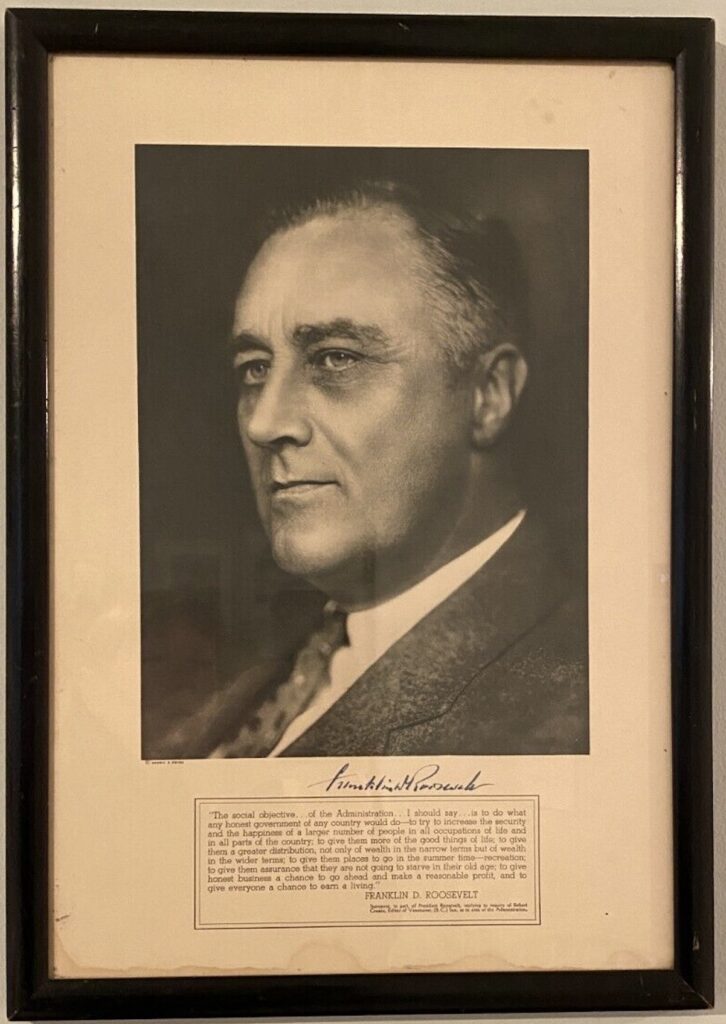
在“东方雅藏 (Oriental Elegance)”的馆藏文献中,一件带有美国第32任总统富兰克林·D·罗斯福(Franklin D. Roosevelt)亲笔签名的宽幅海报(Broadside)格外引人瞩目。这件流传有序的1930年代原版装裱文献,不仅印有白宫御用摄影室 Harris & Ewing 拍摄的总统经典肖像,更镌刻着罗斯福关于“新政(New Deal)”核心理念的著名引言。
浏览藏品:富兰克林·罗斯福(Franklin Roosevelt)“新政”时期亲笔签名原版文献
富兰克林·D·罗斯福的“新政”(New Deal)通常被史学界视为美国国内应对大萧条的经济干预政策,但其产生的外溢效应却深度介入了20世纪30至40年代的国际格局演变。本文探讨了罗斯福新政、第二次世界大战与中国国际地位变化之间的复杂逻辑链条。研究表明,早期新政的白银政策意外引发了中国的金融危机并倒逼国民政府完成法币改革;新政留下的行政扩张与工业遗产,为美国在二战中迅速转型为“民主兵工厂”奠定了制度与物质基础;而在二战的宏大叙事中,罗斯福的全球战略演变促成了中美从早期的经济博弈走向深度的军事同盟,并最终在战后秩序构建中,通过“四大警察”构想从法理上重塑了中国的国际大国地位。
一、 经济溢出与金融重构:1934年《白银收购法案》的跨国震荡
1933年罗斯福就任美国总统时,其施政重心完全聚焦于挽救濒临崩溃的国内经济。为了刺激国内物价上涨、缓解通货紧缩,同时在国会内部安抚势力强大的西部白银产区政治游说集团(Silver Bloc),美国国会于1934年通过了《白银收购法案》(Silver Purchase Act of 1934)。这一本意在于调节美国国内货币基础的政策,却对当时的国际金融体系,尤其是坚持银本位制的中国,产生了剧烈且极具破坏性的溢出效应。
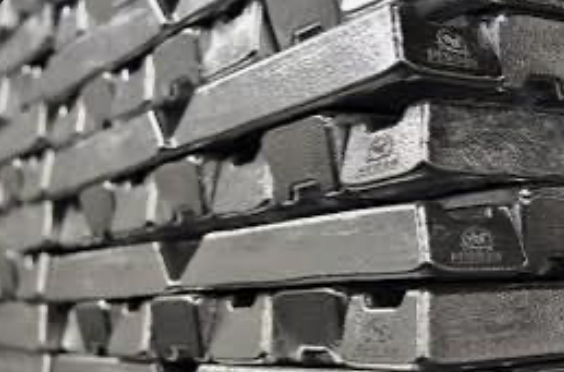
随着美国财政部在国际市场上以高于市价的溢价大肆收购白银,国际银价在短期内狂飙。这直接导致中国国内的白银作为商品被大规模走私外流。这种“抽血式”的货币流失引发了中国严重的通货紧缩:物价暴跌、信贷收缩、上海等金融中心的工商业大面积破产,史称“白银风潮”。
面对国家宏观经济处于崩溃边缘的严峻局面,国民政府在英美专家的介入下,被迫于1935年11月实施“法币改革”。这一改革彻底废除了实行数百年的银本位制,由中央、中国、交通、农民四大银行发行由国家信誉担保的法定货币(法币),并宣布法币无限制买卖外汇,实质上将其与英镑和美元挂钩。
从地缘政治的角度审视,这一被动应对的金融改革具有深远的历史意味。它虽然在短期内稳住了中国宏观经济,统一了全国币制,但也使中国金融体系在抗日战争全面爆发前夕,丧失了部分的货币自主权,深度融入并依赖于英美主导的国际金融体系。更关键的是,法币改革切断了日本在华北进行经济渗透的货币工具,激怒了日本军部,在一定程度上加速了日本全面侵华的步伐。中美两国在经济命运上的捆绑,由此在摩擦与危机中拉开序幕。
二、 国家干预的延伸:新政工业遗产与“民主兵工厂”的崛起
二战爆发前夕,美国国内孤立主义(Isolationism)情绪盛行,中立法案严重捆绑了罗斯福政府的手脚。然而,罗斯福新政在不经意间,为即将到来的全球战争完成了国家动员机制和工业产能的底层构建。
新政的本质是国家权力的急剧扩张与对自由市场的深度干预。期间实施的大规模公共工程(如田纳西河谷管理局 TVA、公共事业振兴署 WPA),不仅极大地改善了美国的电力、交通等基础设施,更重要的是,它在经济寒冬中保留了数以百万计的熟练产业工人队伍。同时,新政催生了一大批精通宏观调控的“新政官僚”(New Deal bureaucrats),重塑了联邦政府统筹国家资源的行政能力。
这种在和平时期建立起来的“大政府”体制,在战争阴云密布时迅速展现出惊人的转化效率。1941年3月《租借法案》(Lend-Lease Act)的通过,标志着新政时期的“国家干预主义”正式从国内经济领域延伸至全球地缘政治领域。依靠新政复苏的庞大工业机器,美国得以迅速建立起战时生产委员会(WPB),将民用产能无缝切换为军工生产,使美国真正成为世界的“民主兵工厂”(Arsenal of Democracy)。
通过《租借法案》,美国用纳税人的资金转化为源源不断的军用物资,支援英国、苏联以及深陷抗日战争泥潭的中国。在亚洲战场,美国的物资与工程技术人员通过九死一生的“驼峰航线”(The Hump)和中印公路输入中国大后方。可以断言,缺乏新政时期积累的产能底子与政府深度调控经验,美国将根本无力支撑欧亚两大广阔战线同时展开的惊人消耗,中美战时同盟也将失去至关重要的物质支撑。
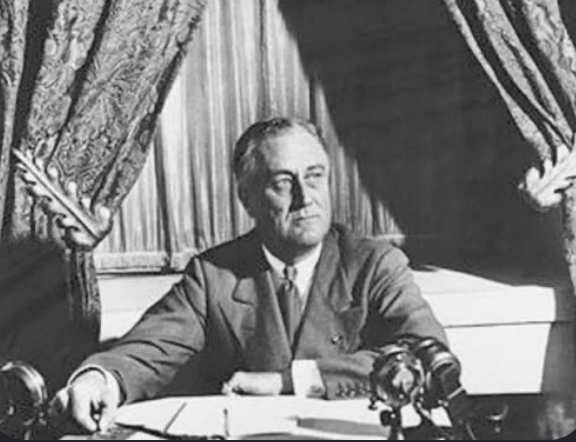
三、 战时战略锚点:罗斯福的远东布局与“四大警察”构想
随着1941年底太平洋战争的全面爆发,中美关系迎来了根本性的战略转折。罗斯福政府深刻意识到,中国战场在牵制日本帝国主义方面具有不可替代的地缘战略价值。为了防止日本陆军主力南下太平洋夺取英美殖民地,或北上夹击苏联,美国必须竭尽全力将中国“留在战争中”。
在这一战略驱动下,中美开启了深度的军事合作。美国不仅派遣陈纳德将军组建“飞虎队”(美国志愿航空队)协助中国争夺制空权,更通过史迪威、魏德迈等高级将领的派驻,深度介入中国战区的军事指挥与后勤重组。
比纯粹的军事援助更具历史穿透力的,是罗斯福对战后世界新秩序的政治规划。罗斯福具有强烈的反殖民主义倾向,他与坚守大英帝国利益的丘吉尔在远东战略上存在深刻分歧。为了表彰中国在反法西斯战争中长达数年的苦撑与巨大牺牲,同时意图在战后亚洲扶持一个强大且亲美的大国,以填补日本战败后的权力真空并牵制苏联,罗斯福力排英国等盟国的异议,提出了由美、英、苏、中共同主导维护世界和平的“四大警察”(Four Policemen)构想。
在此政治框架下,罗斯福政府展开了一系列提升中国国际地位的外交行动:
- 废除不平等条约与排华法案: 1943年,中美签署新约,废除了美国在华治外法权。同年,罗斯福大力推动国会通过《麦诺森法案》(Magnuson Act),正式废除了实施长达60余年、带有强烈种族歧视色彩的《排华法案》。这不仅是对盟友的政治安抚,更是对日本“大东亚共荣圈”及种族主义宣传的有力心理战反击。
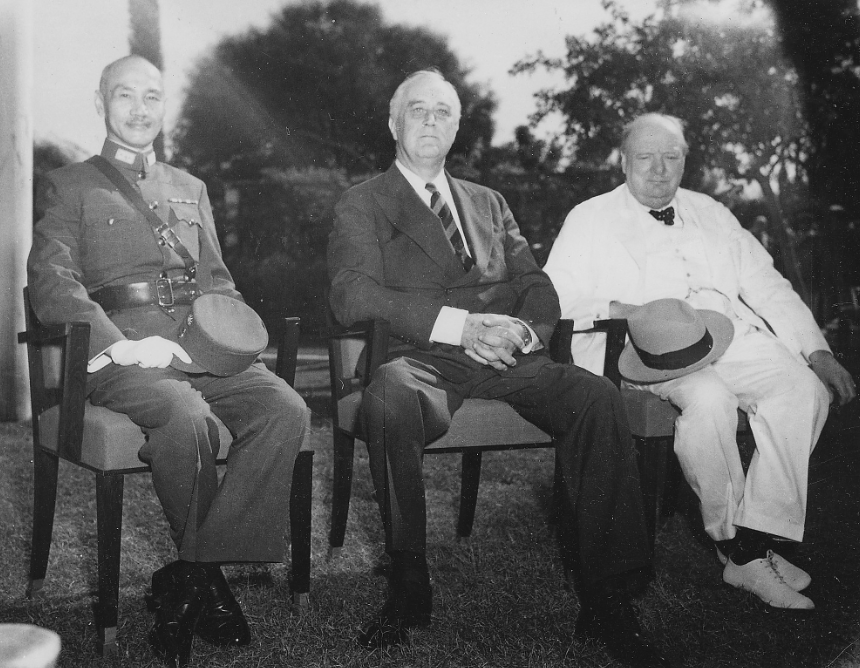
- 开罗会议的历史性背书: 1943年11月的开罗会议上,罗斯福坚持邀请蒋介石以大国领袖身份出席,与美英首脑平起平坐。《开罗宣言》明确规定日本必须归还窃取的中国领土(包括东北、台湾及澎湖列岛)。
这系列外交组合拳,标志着中国在一个世纪的半殖民地屈辱历史后,首次在法理与外交层面上以平等身份参与全球秩序的制定,并最终促成了中国作为联合国安全理事会常任理事国的地位。
四、 藏品的历史意义与时代见证价值
在宏大历史叙事的框架下,任何重大的地缘政治演变最终都会在微观的物质载体上留下印记。目前收录于“东方雅藏 (Oriental Elegance)”的一件1930年代中期富兰克林·罗斯福亲笔签名的“新政”宽幅海报(Broadside),正是这一波澜壮阔时代的绝佳实体见证。这件藏品不仅补充了历史的细节,更为前述的宏观经济与外交战略演变提供了具象化的物理锚点。
首先,该文献是新政意识形态的直接物质载体。海报上镌刻的“社会目标(Social Objective)”引言,是罗斯福推动国家深度干预经济的核心执政逻辑。正是在这一理念的指导下,华盛顿的决策层在1934年出台了《白银收购法案》。因此,这张带有罗斯福遒劲原笔签名的海报,不仅是一份宣誓性的国内政治文献,更是那个引发大洋彼岸中国金融剧震、倒逼法币改革的权力中枢的缩影。它将抽象的“白银风潮”与货币博弈,追溯到了这位坐在椭圆形办公室内的决策者笔端。
其次,藏品绝佳的原装状态与溯源(Provenance)印证了美国战时行政机器的崛起。该画框背板上保留的“Cohen’s Inc.”标签,证明其在1930年代于华盛顿特区市中心(距白宫仅数街区)完成装裱,且几十年来从未被现代商业市场拆解破坏。这一地理位置与时间节点的重合,意味着其原主人极大概率是当时华盛顿“新政官僚”群体中的一员或核心支持者。正是这些海报最初的接收者与珍藏者,在华盛顿建立起了庞大的资源统筹网络,并在随后的二战中,将其无缝转化为执行《租借法案》、支撑“民主兵工厂”运转的行政中枢。
最后,从策展与档案学的维度来看,这件新政时期的罗斯福原版文献,构成了整个二十世纪中叶中美关系档案序列的“逻辑起点”。在“东方雅藏”的馆藏脉络中,如果说1952年夏功权(K.C. Shah)在华盛顿特区使用“中国驻美采购委员会”信笺撰写的亲笔信,以及冷战初期中美高层的互动影像(如卡尼上将与蒋介石的会晤),是二战后中美在冷战铁幕下复杂同盟关系的余波与延续;那么,这件1930年代的罗斯福签名海报,则是这一切历史交汇的源头。它定格了美国彻底告别孤立主义、以大国姿态重塑亚洲格局的前夜,见证了那位将中国推上“四大警察”国际大国地位的掌舵者最真实的领袖意志。
将宏大的学术研究与这一历经近百年岁月却依旧墨色浓郁的实体文物相结合,历史便不再是纸面上的冰冷概念,而成为了可触碰的时代丰碑。
结语
回顾20世纪30至40年代的历史长河,罗斯福新政与二战时期的中美关系,呈现出一条从“无意的经济冲击”向“有意的战略捆绑”演变的清晰轨迹。
罗斯福的新政不仅拯救了面临深渊的美国资本主义体系,其外溢的经济力量与工业体制成果,也成为了反法西斯同盟取得最终胜利的基石。在这一波澜壮阔的历史进程中,中国既是早期美国国内经济政策外溢的被动承受者,也是美国二战全球战略中不可或缺的坚定理事同盟。这两股力量在20世纪中叶的激烈交汇,不仅彻底终结了旧有的远东殖民格局,更为战后中美在冷战初期的复杂博弈,乃至今时今日的亚太地缘政治版图,奠定了深远的历史底色。
From Economic Friction to Strategic Alliance: Franklin D. Roosevelt’s New Deal, World War II, and the Evolution of Sino-American Relations
Abstract Franklin D. Roosevelt’s “New Deal” is typically regarded by historians as a series of domestic economic interventions designed to combat the Great Depression. However, its spillover effects deeply influenced the evolution of the international geopolitical landscape in the 1930s and 1940s. This article explores the complex logical chain connecting the New Deal, World War II, and the transformation of China’s international status. Research indicates that the early New Deal’s silver policy inadvertently triggered a severe financial crisis in China, forcing the Nationalist Government to implement a fiat currency reform. Concurrently, the administrative expansion and industrial legacy left by the New Deal laid the institutional and material foundation for the United States to rapidly transform into the “Arsenal of Democracy” during WWII. In the grand narrative of the war, Roosevelt’s evolving global strategy facilitated the transition of Sino-American relations from early economic friction to a deep military alliance, ultimately reshaping China’s status as a major global power in the post-war order through the “Four Policemen” vision.
I. Economic Spillover and Financial Restructuring: The Transnational Shock of the 1934 Silver Purchase Act
When Franklin D. Roosevelt assumed the presidency in 1933, his administration’s focus was entirely on rescuing the domestic economy from the brink of collapse. To stimulate domestic inflation, alleviate deflation, and appease the powerful political lobbying group from western silver-producing states (the “Silver Bloc”), the U.S. Congress passed the Silver Purchase Act in 1934. This policy, originally intended to adjust the U.S. domestic monetary base, produced a severe and destructive spillover effect on the international financial system, particularly targeting China, which was still operating on the silver standard.
As the U.S. Treasury aggressively purchased silver on the international market at premium prices, global silver prices skyrocketed in the short term. This directly led to the massive smuggling and exodus of silver from China. This catastrophic drain of currency triggered severe deflation in China: commodity prices plummeted, credit contracted, and commercial and industrial enterprises in financial hubs like Shanghai went bankrupt en masse—a crisis historically known as the “Silver Shock.”
Facing a macroeconomic collapse, the Nationalist Government, with the intervention of British and American experts, was forced to implement the “Fiat Currency Reform” (Fapi Reform) in November 1935. This reform entirely abolished the centuries-old silver standard. Four major banks—the Central Bank, Bank of China, Bank of Communications, and Farmers Bank of China—were authorized to issue fiat currency backed by state credit, which was essentially pegged to the British Pound and the U.S. Dollar.
From a geopolitical perspective, this reactive financial reform carried profound historical implications. While it stabilized China’s macroeconomy in the short term and unified the national currency, it also caused the Chinese financial system to lose partial monetary sovereignty on the eve of the Second Sino-Japanese War, deeply integrating it into and making it reliant upon the Anglo-American financial order. More critically, the reform severed the monetary tools Japan had been using for economic penetration in North China, angering the Japanese military and somewhat accelerating their pace toward a full-scale invasion. The binding of the economic destinies of China and the United States thus commenced amidst friction and crisis.
II. The Extension of State Intervention: The New Deal’s Industrial Legacy and the Rise of the “Arsenal of Democracy”
On the eve of World War II, isolationism prevailed within the United States, and neutrality acts severely tied the Roosevelt administration’s hands. However, the New Deal inadvertently completed the foundational construction of a national mobilization mechanism and industrial capacity for the impending global conflict.
The essence of the New Deal was the dramatic expansion of state power and profound intervention in the free market. Massive public works programs implemented during this period (such as the Tennessee Valley Authority and the Works Progress Administration) not only vastly improved America’s power and transportation infrastructure but, more importantly, preserved a workforce of millions of skilled industrial laborers during the economic winter. Simultaneously, the New Deal gave rise to a cadre of “New Deal bureaucrats” adept at macroeconomic regulation, reshaping the federal government’s administrative capacity to coordinate national resources.
This “big government” system, established during peacetime, demonstrated astonishing conversion efficiency as the clouds of war gathered. The passage of the Lend-Lease Act in March 1941 marked the formal extension of New Deal “state interventionism” from the domestic economy to global geopolitics. Relying on the colossal industrial base revived by the New Deal, the U.S. rapidly established the War Production Board (WPB), seamlessly pivoting civilian production capacity to military manufacturing, truly making the United States the world’s “Arsenal of Democracy.”
Through the Lend-Lease Act, the U.S. converted taxpayer funds into a continuous stream of military supplies to support Britain, the Soviet Union, and China, which was bogged down in a grueling war of resistance against Japan. In the Asian theater, American supplies and engineering personnel were transported to China’s rear through the perilous “Hump” airlift and the Ledo Road. It is undeniable that without the industrial foundation and profound government regulatory experience accumulated during the New Deal, the U.S. would have been entirely unable to sustain the staggering consumption of fighting simultaneously across the vast European and Asian fronts, and the Sino-American wartime alliance would have lost its crucial material support.
III. Wartime Strategic Anchor: Roosevelt’s Far East Strategy and the “Four Policemen” Vision
With the outbreak of the Pacific War in late 1941, Sino-American relations reached a fundamental strategic turning point. The Roosevelt administration deeply realized the irreplaceable geopolitical value of the Chinese theater in pinning down Japanese imperialism. To prevent the main force of the Japanese Army from advancing south to seize Anglo-American colonies in the Pacific, or moving north to attack the Soviet Union, the United States had to do everything in its power to keep China in the war.
Driven by this strategy, the U.S. and China embarked on deep military cooperation. The U.S. not only dispatched General Claire Lee Chennault to form the “Flying Tigers” (American Volunteer Group) to help China contest air superiority, but also deeply intervened in the military command and logistical reorganization of the China Theater through the deployment of high-ranking generals such as Joseph Stilwell and Albert Coady Wedemeyer.
Even more historically penetrating than pure military aid was Roosevelt’s political vision for the post-war world order. Harboring strong anti-colonial sentiments, Roosevelt had profound disagreements with Winston Churchill—who staunchly defended the interests of the British Empire—regarding Far East strategy. To recognize China’s years of bitter struggle and immense sacrifices in the anti-fascist war, and with the intention of fostering a powerful, pro-American major nation in post-war Asia to fill the power vacuum left by a defeated Japan and to counterbalance the Soviet Union, Roosevelt overruled objections from allies like Britain. He proposed the “Four Policemen” concept, envisioning a world peace maintained jointly by the United States, Great Britain, the Soviet Union, and China.
Under this political framework, the Roosevelt administration launched a series of diplomatic initiatives to elevate China’s international status:
- Abolition of Unequal Treaties and the Chinese Exclusion Act: In 1943, the U.S. and China signed a new treaty relinquishing American extraterritorial rights in China. That same year, Roosevelt strongly pushed Congress to pass the Magnuson Act, officially repealing the Chinese Exclusion Act, which had been enforced for over 60 years and carried intense racial discrimination. This was not only a political gesture of appeasement to an ally but also a powerful psychological counterattack against Japan’s “Greater East Asia Co-Prosperity Sphere” and its racist propaganda.
- The Historical Endorsement of the Cairo Conference: At the Cairo Conference in November 1943, Roosevelt insisted on inviting Chiang Kai-shek to attend as a major world leader, on equal footing with the U.S. and British heads of state. The resulting Cairo Declaration explicitly stipulated that Japan must return all stolen Chinese territories (including Manchuria, Taiwan, and the Penghu Islands).
This series of diplomatic maneuvers marked the first time in a century of semi-colonial humiliation that China participated in shaping the global order on an equal footing, both legally and diplomatically, ultimately facilitating China’s status as a permanent member of the United Nations Security Council.
IV. The Historical Significance and Evidentiary Value of the Collection Artifact
Within the framework of grand historical narratives, any major geopolitical evolution eventually leaves its mark on microscopic, material carriers. A mid-1930s broadside, personally signed by Franklin D. Roosevelt and currently housed in the collection of “Oriental Elegance,” serves as an exquisite physical witness to this magnificent era. This artifact not only supplements historical details but also provides a concrete physical anchor for the macroeconomic and diplomatic strategic evolutions discussed above.
First, the document is a direct material carrier of New Deal ideology. The quotation regarding the “Social Objective” engraved on the poster represents Roosevelt’s core governing logic for driving deep state intervention in the economy. It was precisely under the guidance of this philosophy that Washington policymakers introduced the Silver Purchase Act in 1934. Therefore, this poster, bearing Roosevelt’s bold original signature, is not merely a declarative domestic political document; it is a microcosm of the very center of power that triggered the financial earthquake in China across the ocean and forced the fiat currency reform. It traces the abstract “Silver Shock” and monetary maneuvering back to the pen of the decision-maker sitting in the Oval Office.
Second, the artifact’s exceptional original condition and provenance attest to the rise of America’s wartime administrative machine. The “Cohen’s Inc.” label preserved on the back of the frame proves that it was framed in downtown Washington D.C. (just blocks from the White House) in the 1930s and has never been dismantled or compromised by the modern commercial market over the decades. The convergence of this geographic location and timeframe indicates a high probability that its original owner was a member of, or a core supporter among, the “New Deal bureaucrats” in Washington at the time. It was precisely the initial recipients and preservers of these posters who built the massive resource coordination network in Washington, seamlessly transitioning it during WWII into the administrative nerve center that executed the Lend-Lease Act and sustained the “Arsenal of Democracy.”
Finally, from a curatorial and archival perspective, this original New Deal-era Roosevelt document constitutes the “logical starting point” for the entire archival sequence of mid-20th-century Sino-American relations. Within the collection lineage of Oriental Elegance, if the 1952 handwritten letter by Konsin C. Shah (K.C. Shah) on “Chinese Defense Ministry Procurement Commission” letterhead in Washington D.C., and the interactions between high-ranking U.S. and Chinese officials during the early Cold War (such as Admiral Carney’s meetings with Chiang Kai-shek), represent the reverberations and continuation of a complex alliance under the Cold War Iron Curtain—then this 1930s Roosevelt signed broadside is the wellspring where all these histories converge. It captures the eve of America’s definitive departure from isolationism to reshape the Asian landscape as a great power, witnessing the truest leadership will of the statesman who elevated China to the international status of one of the “Four Policemen.”
When grand academic research is combined with this physical artifact—which has weathered nearly a century yet retains its bold, dark ink—history ceases to be a cold concept on paper and transforms into a tangible monument of an era.
Conclusion
Looking back at the long river of history in the 1930s and 1940s, the relationship between Roosevelt’s New Deal and Sino-American relations during WWII presents a clear evolutionary trajectory from “unintentional economic shock” to “intentional strategic binding.”
Roosevelt’s New Deal not only saved the American capitalist system from the abyss, but the spillover of its economic power and industrial structure also became the cornerstone for the ultimate victory of the anti-fascist alliance. In this momentous historical process, China was both the passive recipient of the spillover from early U.S. domestic economic policies and an indispensable, steadfast allied pillar in America’s WWII global strategy. The intense intersection of these two forces in the mid-20th century not only thoroughly dismantled the old colonial order in the Far East but also laid a profound historical foundation for the complex Sino-American maneuvering in the early Cold War, and even for the geopolitical map of the Asia-Pacific region today.